Having problems with the Italian language? Do you need help to translate or understand an old family document? There is always someone who can help you!
I do not speak Italian and have been struggling for almost a week with trying to translate handwriting into something that "Google Translate" can handle. So far, I have about a 60 to 75% success rate, and if nothing more, I am learning to "see" certain handwritten letters and pick out key words. Maybe someday, I won't need help. LOL
image 18 - hoping to get a clue as to the abandonment of my Gr-Gr-grandfather, Pantaleone Ruggito/Rugito
image 20, which appears to document the death of Anna Rosa Mele, my 3rd great-grandmother.
Having already spent numerous hours on these pages myself, I appreciate the time it takes to translate this. I am very grateful for the volunteers here. Grazie!
Image 18
Copy - Order nr 84 - Birth act of Pantaleone Rugito. The year 1860, on day 16 of April at 3.00pm - In front of us Antonio Lioy, major and civil state officer of Ripacandida, Province of Basilicata, appeared Maria Donata Cestelli daughter of deceased Giovanni, aged 28, spinner, residing in Ripacandida, who presented to us an abandoned baby male, that we have seen personally, and she declared that the same was born to unknown parents about 5 days ago. The same (Maria Donata) also declared to give the baby the name Pantaleone Rigito.
The presentation and the declaration was made in front of Francesco Baffari... and of Pasquale Ianardi... witnesses presented by the declarant.
The baby was baptized the day 17 of April.
It is very likely that Maria Donata was the biological mother, but there is no clue about that.
Image 20
Anna Rosa Mele, aged 47, peasant farmer residing in Ripacandida, died 26 March 1883. She was born in Rionero and she was the daughter of Arcangelo and of Maria Sessa. She was the wife of Michele Martino.
I have DNA relatives on 23andme, ancestryDNA, and FamilyTreeDNA - but we can not find common names. Maybe (just maybe) Maria Donata Cestelli could be a connection!
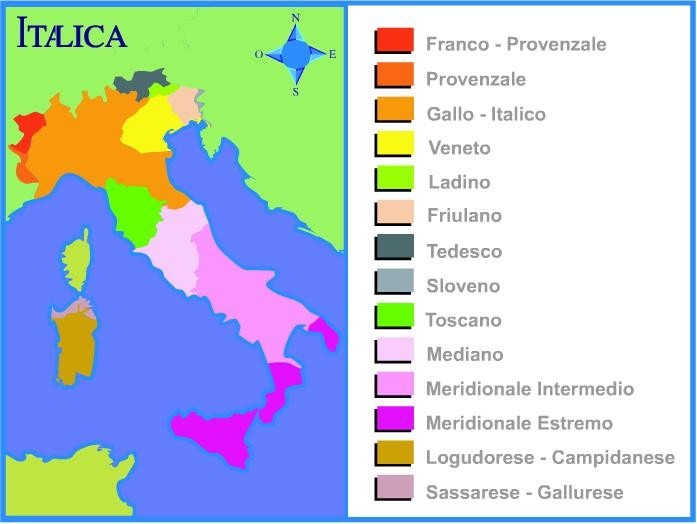
The dialects of modern Italian all have their roots in the spoken form of Latin (Vulgar Latin), in use throughout the Roman Empire. Vulgar Latin had, no doubt, its own local peculiarities before the fall of the Empire. The political instability that followed Roman rule kept Italy from re-uniting as ...