Having problems with the Italian language? Do you need help to translate or understand an old family document? There is always someone who can help you!
erudita74 wrote:In the book Our Italian Names, the author Joseph G Fucilla even notes that the surname Secatore was derived from the field of carpentry. I also found another reference for the word in "secatori di travi"-plural-those who sawed beams or girders
Erudita
Thank you for the additional information here Erudita. I've added this occupation to my list. It has been another interesting, informative exercise. (Secatore (saw) reminds me of the word secateur (clip, cut). I was wondering whether they were related. I think secateur might be a French word.)
erudita74 wrote:In the book Our Italian Names, the author Joseph G Fucilla even notes that the surname Secatore was derived from the field of carpentry. I also found another reference for the word in "secatori di travi"-plural-those who sawed beams or girders
Erudita
Thank you for the additional information here Erudita. I've added this occupation to my list. It has been another interesting, informative exercise. (Secatore (saw) reminds me of the word secateur (clip, cut). I was wondering whether they were related. I think secateur might be a French word.)
Angela
Angela
You're absolutely correct about the word secateur, with an acute accent on the first e, being a French word. Hadn't thought about it, as my French is very very rusty. It does mean clippers or pruning sheers and can be found in Eng dictionaries, but without the accent. So the one informant in the record could have been someone who did pruning, but it's hard to say since the word in the record is non-specific, and the word secatore seems to vary in meaning depending on what follows it, as I have shown in the examples I gave above.
Hi Dolores
Look what this record started! We're all getting better educated.
Erudita
erudita74 wrote:In the book Our Italian Names, the author Joseph G Fucilla even notes that the surname Secatore was derived from the field of carpentry. I also found another reference for the word in "secatori di travi"-plural-those who sawed beams or girders
Erudita
Thank you for the additional information here Erudita. I've added this occupation to my list. It has been another interesting, informative exercise. (Secatore (saw) reminds me of the word secateur (clip, cut). I was wondering whether they were related. I think secateur might be a French word.)
Angela
Angela
You're absolutely correct about the word secateur, with an acute accent on the first e, being a French word. Hadn't thought about it, as my French is very very rusty. It does mean clippers or pruning sheers and can be found in Eng dictionaries, but without the accent. So the one informant in the record could have been someone who did pruning, but it's hard to say since the word in the record is non-specific, and the word secatore seems to vary in meaning depending on what follows it, as I have shown in the examples I gave above.
Hi Dolores
Look what this record started! We're all getting better educated.
Erudita
Awesome, thank you for following up on this Erudita and for getting back to me.
This is how it defines “vetturale”: “one who for compensation transports things or persons with pack animals or with a 2- or 4-wheeled wagon; carter.”
So yes, a Cabman - I guess.
Just thought this might be of interest. I'd not heard the word Cabman before. I've heard of Cab-drivers (transporting people for compensation) and Carriers (transporting things for compensation) but not Cabman.
It defines vetturale as a “carrier” which I imagine is the closer translation of the type of work Giuseppe undertook but I am always open to correction. (Just speculating here but maybe Giuseppe and Rocco worked together. Maybe Rocco pruned grape vines and Giuseppe transported the produce or wine. Who knows? It would be quite interesting to observe whether their occupations listed on future records you find change/evolve. I’ve noticed some of mine have changed over the years.)
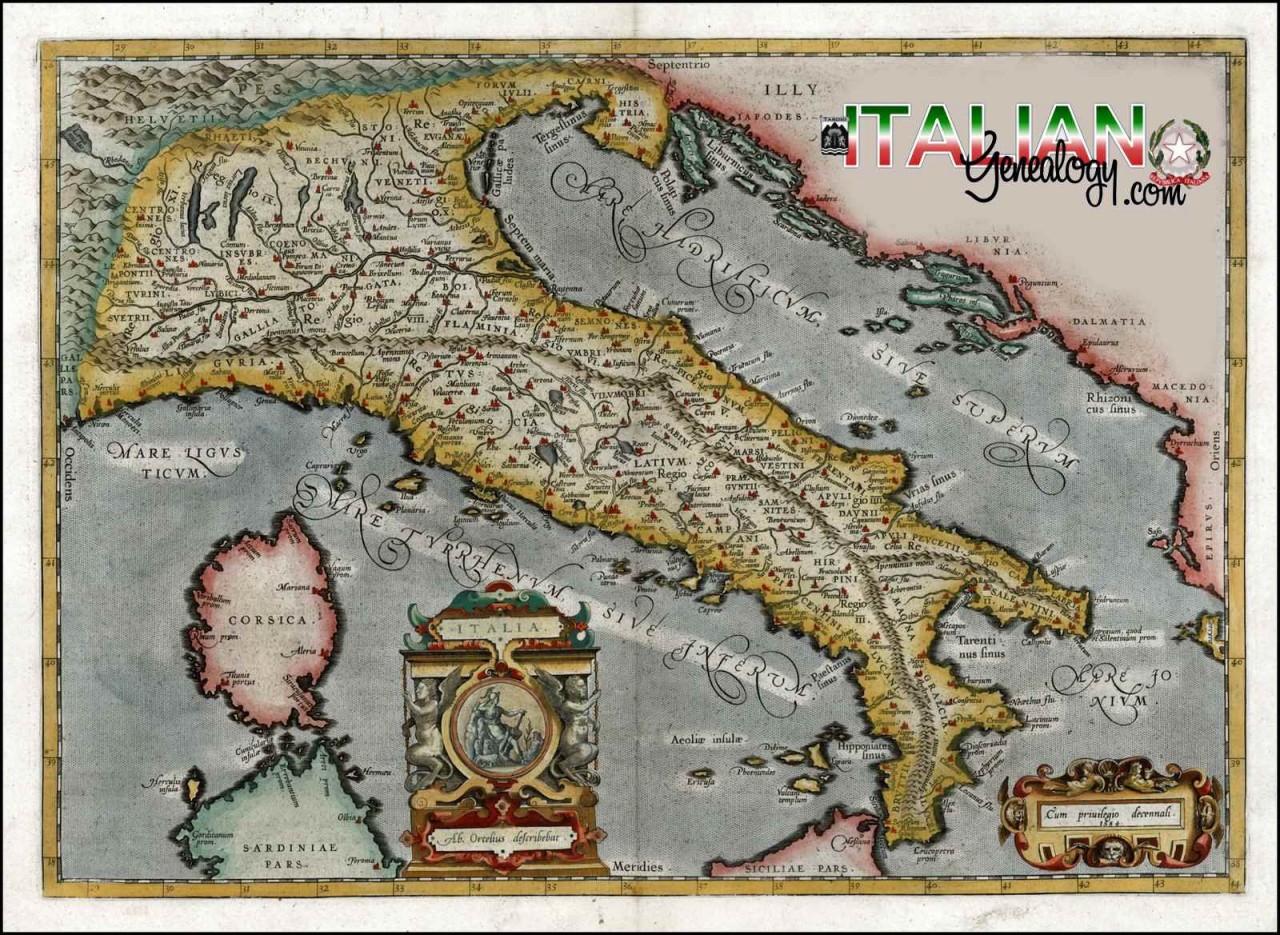
As a nation state, Italy has emerged only in 1871. Until then the country was politically divided into a large number of independant cities, provinces and islands. The currently available evidences point out to a dominant Etruscan, Greek and Roman cultural influence on today's Italians. The earlies...